
Coca-Cola Europacific Partners Excursion: Days 1 & 2 Recap
Our students have kicked off an exciting four-day journey with Coca-Cola Europacific Partners (CCEP), diving into real-world industry experience and hands-on problem solving.
Day 1: On-Site at CCEP Moorabbin
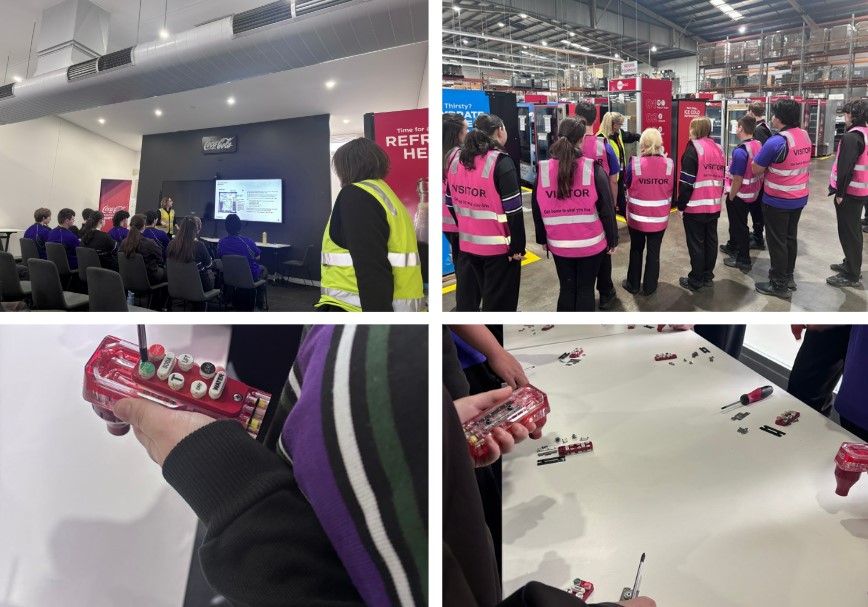
Students travelled to the Coca-Cola Europacific Partners production site at Moorabbin, where they got a behind-the-scenes look at how one of the world’s largest beverage companies operates. From production lines to logistics, students saw first-hand the scale and precision involved in running a major manufacturing facility. It was a fantastic opportunity to connect classroom learning to real industry practice, and students came away with a genuine appreciation for the engineering, safety standards, and teamwork that keep operations running smoothly.
Day 2: Innovating at KIOSC
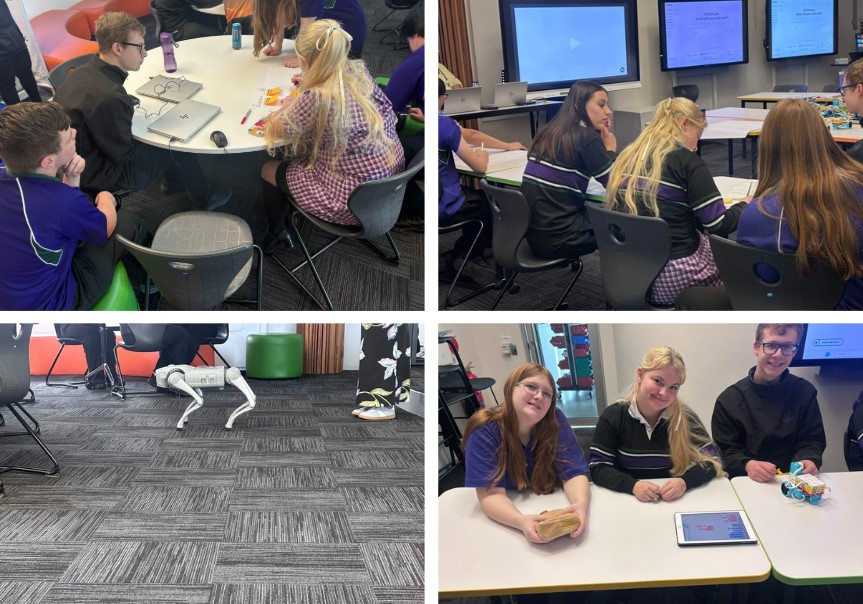
Day 2 shifted gears as students headed to KIOSC, where they began putting their site visit insights into action. Working in teams, students started building a mini model of a solution inspired by what they observed at CCEP the day before. This hands-on design and construction phase challenged students to think like engineers and problem-solvers, applying creativity and collaboration to bring their ideas to life.
We’re proud of how engaged and enthusiastic our students have been over these first two days, and we’re looking forward to seeing their models take shape as the excursion continues. Stay tuned for further updates as the program progresses!
Year 7 Update – A Fantastic Start to Semester Two
It is hard to believe that we are officially over halfway through the school year! Our Year 7 students have made a fantastic start to Semester Two, and it has been wonderful to see them continuing to grow in confidence, independence and maturity. After a busy first half of the year, students have settled back into their learning and routines really well and continue to build positive connections with their peers and teachers.
During our recent Thrive sessions, students have been focusing on the importance of having a growth mindset and how this connects with our school values. We have been exploring the idea that our abilities are not fixed and that our brains can continue to grow and change through effort, practice and new experiences. Students have particularly enjoyed learning about neuroplasticity and understanding how their brains create and strengthen new pathways when they challenge themselves, practise skills and learn from mistakes.
These conversations have also provided a great opportunity to reinforce the importance of respect and demonstrating our school values every day. We encourage our Year 7 students to think about how their choices, language and actions impact those around them. Respect for peers, staff, our school environment and the wider community continues to be an important focus as our students develop into positive and responsible members of Fairhills.
We would also appreciate families having a conversation at home about road and bike safety. Recently, we have noticed some students leaving the school grounds on bikes via the driveways, riding in front of moving vehicles and, in some cases, riding without helmets. With our school located near busy roads, it is extremely important that students make safe choices when travelling to and from school. Students riding bikes should always wear an approved helmet, use appropriate exits, remain aware of vehicles and pedestrians, and take particular care when approaching and crossing the main road.
We are incredibly proud of how our Year 7 cohort has started Semester Two and look forward to seeing them continue to challenge themselves, demonstrate our school values and make the most of the second half of their first year at Fairhills High School.
Sarah Power
Year 7 Team Leader
Year 9 Connect- Melbourne Goal
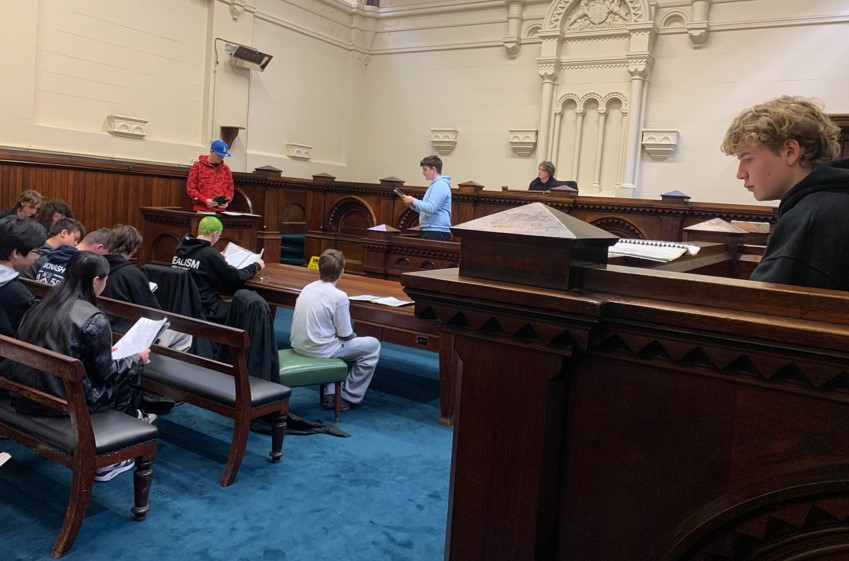
This week the Year 9 cohort visited the historic Melbourne Gaol. Whilst there, they had the opportunity to go on a tour of the old gaol site and they were granted access into the old Magistrates Court.
Whilst on the tour, students learnt about the harsh living conditions experienced by prisoners, the punishments awarded for bad behaviour and about the hangings of some of Victoria’s most notorious criminals. Whilst walking through the cells, some students even swore that they saw ghosts!
They were also able to enter the old Magistrates Court and they were given the opportunity to role play a real culpable driving case. The case involved a young driver, Kim Tran, who was racing his friend in Preston resulting in the death of his passenger. Brave students donned their lawyer, defendant and witness caps and read through a script about the case. Afterwards, they were encouraged to consider the mitigating and aggravating factors of the case and discuss the sentence that would have been fair.
Thankfully, all students made it out of Melbourne Gaol with clean records and no need for bail — a successful excursion by all accounts.
Year 9 Connect- Ethical Games
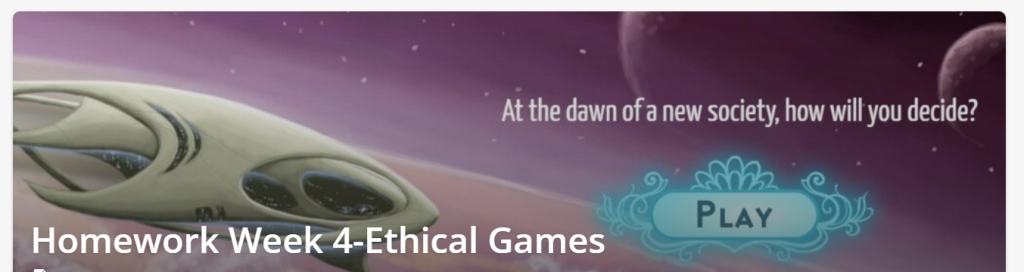
This semester in Connect students are exploring what it takes to make good decisions as an individual, a family, an organisation, a country or indeed a global community. Revisiting for context topics covered in Semester One such as Climate crisis and key drivers of inequality and conflict. Students will be introduced to major ethical frameworks and will use these frameworks as tools to analyse real and hypothetical ethical dilemmas. For Week 4’s homework students explored the role of games in building up ethical decision making muscles.
To get a flavour of the work what follows are some examples of student reflections.
What was your favourite scenario and why?
- My favourite was the one with the Amazon package, it is very creative.
- I liked the cat and lobster scenario it was unexpected.
- I liked the reincarnation scenario because it is an interesting concept.
What was the trickiest Absurd Trolley Problem scenario to make a decision and why?
- The trickiest was choosing between my best friend and five random people.
- How to choose between cousins, they are all related to me.
- Choosing between active intervention and passive inaction
Have a go yourself https://neal.fun/absurd-trolley-problems/
Students played an online game called Quandary https://quandarygame.org/ where they played as the leader of a new colony. This short game breaks down the decision making process, for a range of scenarios engaging with difference between facts and opinions and using different ethical reasoning skills and attempting to make and communicate the right decision as the colony leader. Students were asked to summarise the scenarios and the dilemma.
The essence of the dilemma was if the community of the planet should trap and poison the animals. The process of decision making was to gather everyone’s opinion about the dilemma and figuring out who agrees or disagrees with trapping and poisoning animals.
The community’s public water well is polluted and unhealthy to drink and the only clean water source belongs to the construction chief who has a private well which he charges a fee for. Poorer colonists cannot afford this. I must make good decisions to make it all fair.
Go to https://quandarygame.org/ to play yourself.
Lastly students were asked to reflect on games they played and the role of games in teaching about ethical decision making.
In Rocket League, which is a car soccer game, there is boost which speeds you up when you use it. There are boost pads which is where you get the boost from and the dilemma in this is that many times you run into your teammates and annoy them. So you must either risk ruining your teammates play for your personal gain or just let them have it. Using the outcome door you must predict what happens and make a move.
We should play games in connect because it teaches us important life skills using fun and relatable games.
Based on the feedback from students we’ve been able to find other opportunities to use games to explore how to make good decisions. In Weeks 6-7 Students will be solving complex problems in a simulation and reflecting on the role of added complexity and the pressure of time in an online simulation. Bloom: The Saga of the Poop Fertilizer Economy. In Bloom: The Saga of the Poop Fertilizer Economy, players serve as the director of SAGA:The Sustainable Agricultural Growth Administration. In this role, their goal is to foster economic growth across five different counties while reducing agricultural runoff and gross algal blooms.
Connect students will be using these tools and their learning from the year to create meaningful action about the things that matter to them.
Year 11 Food Studies Explores Queen Victoria Market
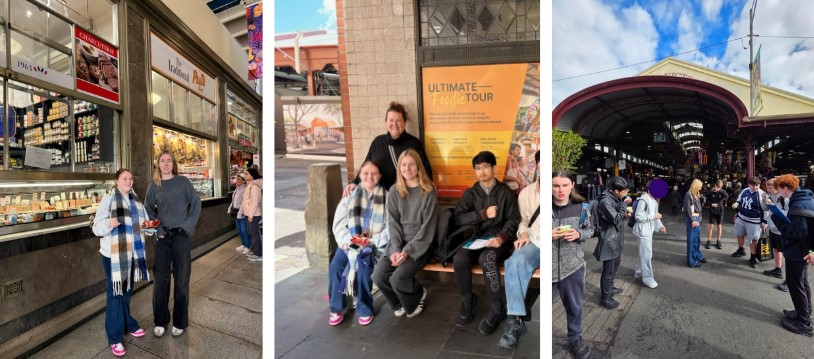
Recently our Year 11 VCE Food Studies students took a trip to Queen Victoria Market to explore sustainability initiatives and product innovations from market vendors. Our tour guide Irene helped us navigate the market, highlighting the various sustainability projects the market has created to reduce and repurpose the amount of food waste it generates. The excursion was a fun and eye-opening visit to this famous Melbourne landmark.
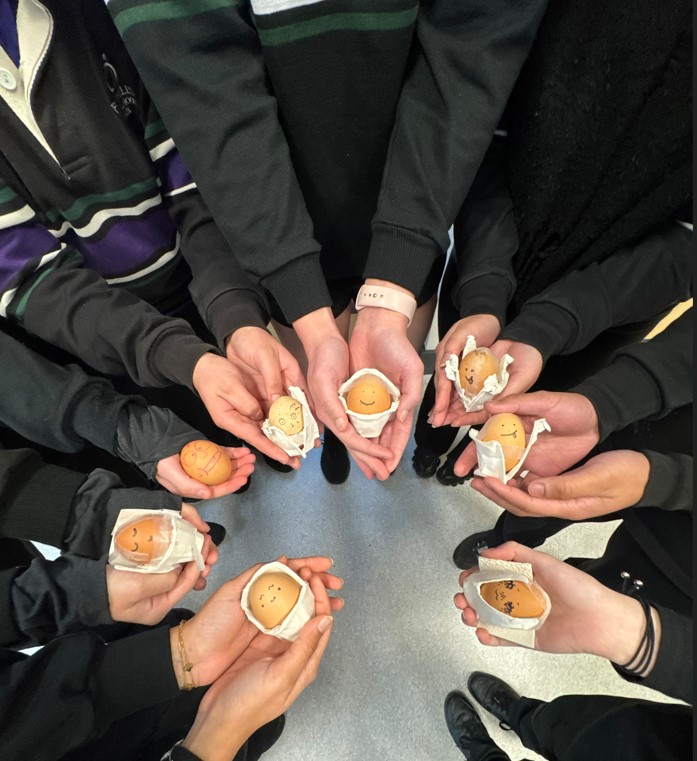
Year 11 Health and Human Development Egg Babies
Our Year 11 Health and Human Development students have been learning about developmental transitions across the lifespan.
As part of their learning, students have been tasked with looking after an Egg Baby for two weeks. Their job is to protect their Egg Baby, take it with them throughout their day and reflect on the responsibilities and considerations associated with becoming a parent.
Over the next week, the Egg Baby will represent a developing baby progressing through the stages of prenatal development. Students will apply their knowledge of fertilisation, the germinal, embryonic and foetal stages, as well as the risk and protective factors that can influence prenatal development.
Year 12 Biology
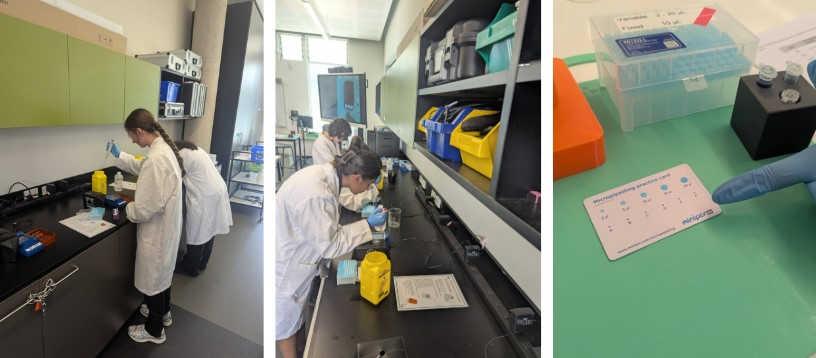
A big advantage of our collaboration with KIOSC is that students are exposed to advanced technologies and techniques and immersion in the scientific and engineering problem solving process. This was very much in evidence in the Unit 4 Biology Excursion. Students used real data from the Duke Lemur Centre to identify different lemur species using a range of techniques. The conservation of species on our fragile planet is but one area where students in the sciences investigate sustainable solutions to wicked problems.
Our KIOSC workshop leader was very impressed, as was I, with our students’ technical skills and their attention to detail. Skills such as accurately measuring 2 millionth of a litre and dispositions such as sustaining focus and methodical application that will stand them in good stead beyond the classroom in further study and beyond.