
Year 7 Humanities – Liveable Cities
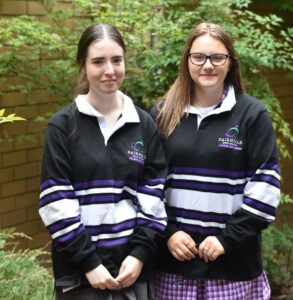
This term in Year 7 Humanities, students have been exploring the concept of Liveable Cities. They have been investigating what makes a place liveable and examining the different factors that contribute to quality of life in communities around the world.
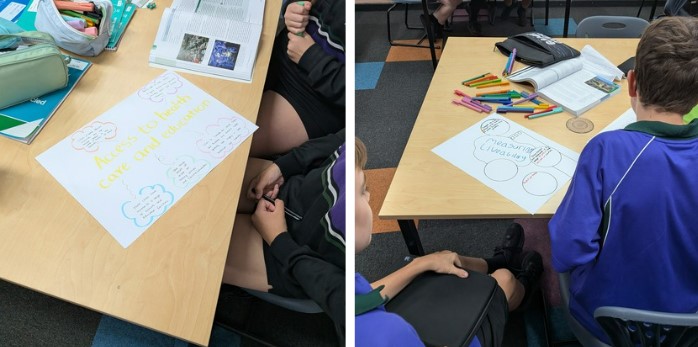
As part of their learning, students researched one specific measure of liveability — such as access to environmental quality, access to health care and education, safety and stability, infrastructure and the natural landscape— and prepared a short presentation to share their findings with the class.
Through this task, students not only developed their research skills but also strengthened their confidence in speaking and teaching others.
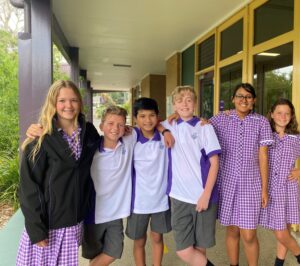
Our Year 7 students did a fantastic job presenting their information clearly and engagingly. It was wonderful to see them working collaboratively and learning from one another as they built their understanding of what makes cities great places to live.
Year 10 Scientific Report Writing at KIOSC
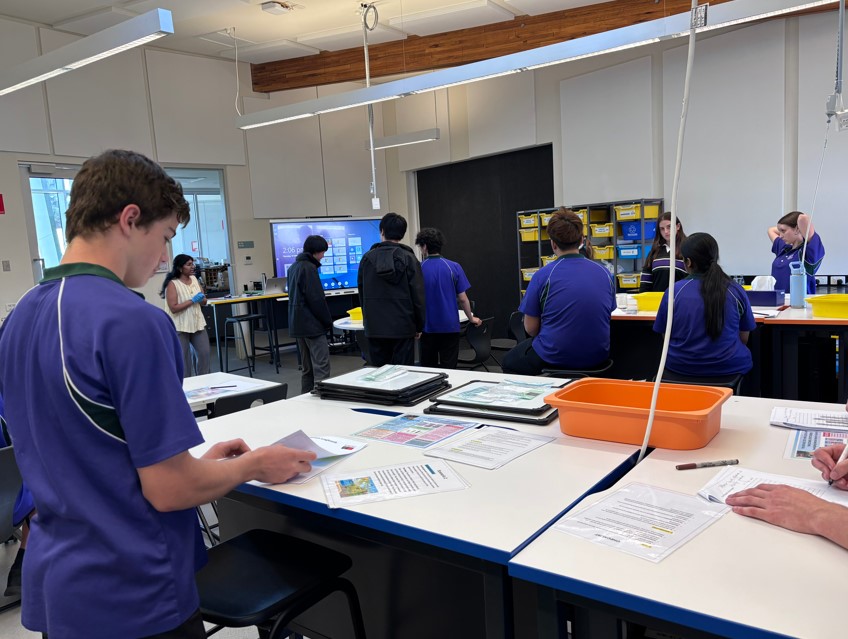
This term, our Year 10 students strengthened their scientific report writing skills during their excursion to KIOSC. The experience provided an authentic laboratory setting where students conducted a structured investigation and applied formal scientific conventions in real time.
Students began by clearly identifying the aim, hypothesis, and variables before undertaking their experiment. They collected accurate quantitative data, ensuring repeated trials to improve reliability and careful control of variables to maintain validity. Emphasis was placed on precision, safe laboratory practice, and correct use of specialised equipment.
Following the practical component, students organised their findings into properly formatted results tables and labelled graphs, selecting appropriate graph types and including correct units. In their reports, students analysed trends, applied relevant scientific concepts, and evaluated the reliability and limitations of their method. Reports were written in formal scientific language, in the third person, and in the past tense, reinforcing expectations for senior science pathways.
The KIOSC experience provided students with an excellent opportunity to practise independent thinking, problem-solving, and professional scientific communication in a real-world learning environment.
Sustainability Focus
As part of our ongoing commitment to sustainability, students were encouraged to minimise waste during their experiments. Where possible, reusable equipment was prioritised over disposable materials, and careful measurement techniques were used to reduce chemical waste. Discussions also explored how scientific investigations can contribute to solving real-world environmental challenges, reinforcing the importance of responsible scientific practice in creating a more sustainable future.
Year 10 Life 360 – Respectful Relationships Day
On Wednesday 25 February, our Year 10 students participated in a full-day Life 360 – Respectful Relationships program focused on building respectful communication, understanding the impact of language, and strengthening inclusion and belonging across our school community.
The day began with a Welcome to Country and the establishment of clear workshop norms to ensure psychological safety, respect, and inclusion for all students. Together, students committed to listening actively, speaking respectfully, protecting confidentiality, and supporting one another throughout the learning experience.
A Powerful Start – Lived Experience & Social Cohesion
We were honoured to welcome Peter Mashamingo as our keynote speaker. Peter shared his lived experience and spoke about social cohesion, identity, and the importance of respect in diverse communities. His story encouraged students to reflect on empathy, belonging, and the real-world impact of how we treat others.
Hate Speech, the Law & Respectful Communication
Students then explored the complex topic of hate speech and respectful communication. Through interactive activities and scenario discussions, they examined:
- What hate speech is — and what it is not
- The difference between attacking ideas and attacking people
- The emotional and social harm caused by discriminatory language
- The role of Australian and Victorian law in addressing serious cases
- Why respectful disagreement is both possible and essential
A key takeaway for students was that free speech and respect are not opposites — they work best together. Students engaged in line debates, small-group discussions, and reflection activities to deepen their understanding of how language shapes wellbeing and community safety.
Social Media & Healthy Relationships
In a session led by Jacob Hayles and Greg Baker students examined how online communication can amplify harm, particularly through the use of a “carriage service” (such as phones, text, social media and messaging platforms). They explored:
- How online comments spread quickly
- The impact of digital permanence
- The importance of pausing before posting
- Practical tools for communicating respectfully online
This session reinforced that digital citizenship is a key part of healthy relationships in today’s world.
Inclusion & Difference – Interactive Around the World
Facilitated by Tamara and Kaye, students participated in an interactive workshop exploring diversity, inclusion, and difference. Through collaborative activities, students considered how stereotypes, bias, and exclusion can impact wellbeing , and how inclusive actions build stronger communities.
Creative Reflections & Harmony Day
The afternoon concluded with Creative Reflections of Key Learnings, led by Mariani Lim. Students began preparing creative pieces aligned to our upcoming Harmony Day celebration, centred on the themes of inclusion, belonging, and wellbeing.
Students are designing posters, digital artworks, poems, short videos and other creative pieces that reflect:
- The importance of respectful communication
- Challenging stereotypes and racism
- Building inclusive and supportive environments
- Promoting wellbeing and belonging
Selected works will be showcased as part of our Harmony Day celebrations in March.
Year 11 VM Visit to Knox Leisureworks
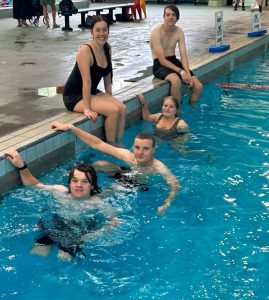
The Year 11 VCE Vocational Major class recently visited Knox Leisureworks as part of their Work Related Skills studies.
The excursion gave students the opportunity to explore what it is like to work in a busy leisure centre. During the tour, staff explained the variety of roles available, including lifeguarding, swim teaching, customer service and management. Students learned about workplace expectations, required qualifications, and the importance of teamwork and communication in a real-world setting.
The visit supported students’ understanding of employability skills and potential career pathways in the sport and recreation industry. To finish off the day, students enjoyed a swim, experiencing the facility from a customer’s perspective.
It was a valuable and engaging learning experience for all involved.
Year 12 VM Restaurant visit
On 24 February, the year 12 VM class went to Queen Vic market and Universal Cafe as part of their integrated project. At Queen Vic market they were finding different products and comparing prices and marketing strategies to compare their work to major supermarkets. They met with the manager at Universal Cafe on Lygon street where they asked questions about how to run a restaurant and the processes involved.
This links to their integrated project ‘The Restaurant’ as students are in the process of creating and designing their own restaurant. They are curating a menu with multiple recipes, creating a model of their restaurant, and showing their understanding of the processes involved.